Monday, November 26, 2012

Zinc & Hydrochloric Acid


Today we observed the reaction of zinc and hydrochloric acid. When these two react they give off pure hydrogen gas, which we captured in a balloon. See the pictures and videos below.

Above is a picture of zinc. The white on the zinc that you see is corrosion.


In the picture above, the zinc is in the balloon. In the beaker is hydrochloric acid. We placed the balloon on top so we don't lose any of the gas created from the reaction when we drop in the zinc.

 After the reaction.

The black particles floating on top is the corrosion from the zinc.

Pure hydrogen balloon taped to the table. The balloon would float otherwise. Hydrogen has a very low density.

Hydrochloric acid and zinc reaction video


Hydrogen balloon explosion


Wednesday, October 24, 2012

Separating Mixtures - Day 1

We learned different methods of separating mixtures.

The first method is sorting by hand. The students sorted a mixture of popcorn kernels, rice, and black beans.


Next the students used a magnet to separate a mixture of iron filings and pencil shavings.


Sunday, October 14, 2012

Mentos Experiment

Testable Question: Which liquid will have the greatest reaction if we put Mentos in Coke, Diet Coke, Sprite, and Carbonated Water as measured by loss of mass?


Click on video!


Flammability Test

We were discussing physical and chemical properties and changes of different types of matter. This particular day our testable question was....

Which of the following liquids are flammable: water, rubbing alcohol, olive oil, and finger nail polish remover?


Sunday, October 7, 2012

Vinegar & Baking Soda Reaction - Chemical Changes


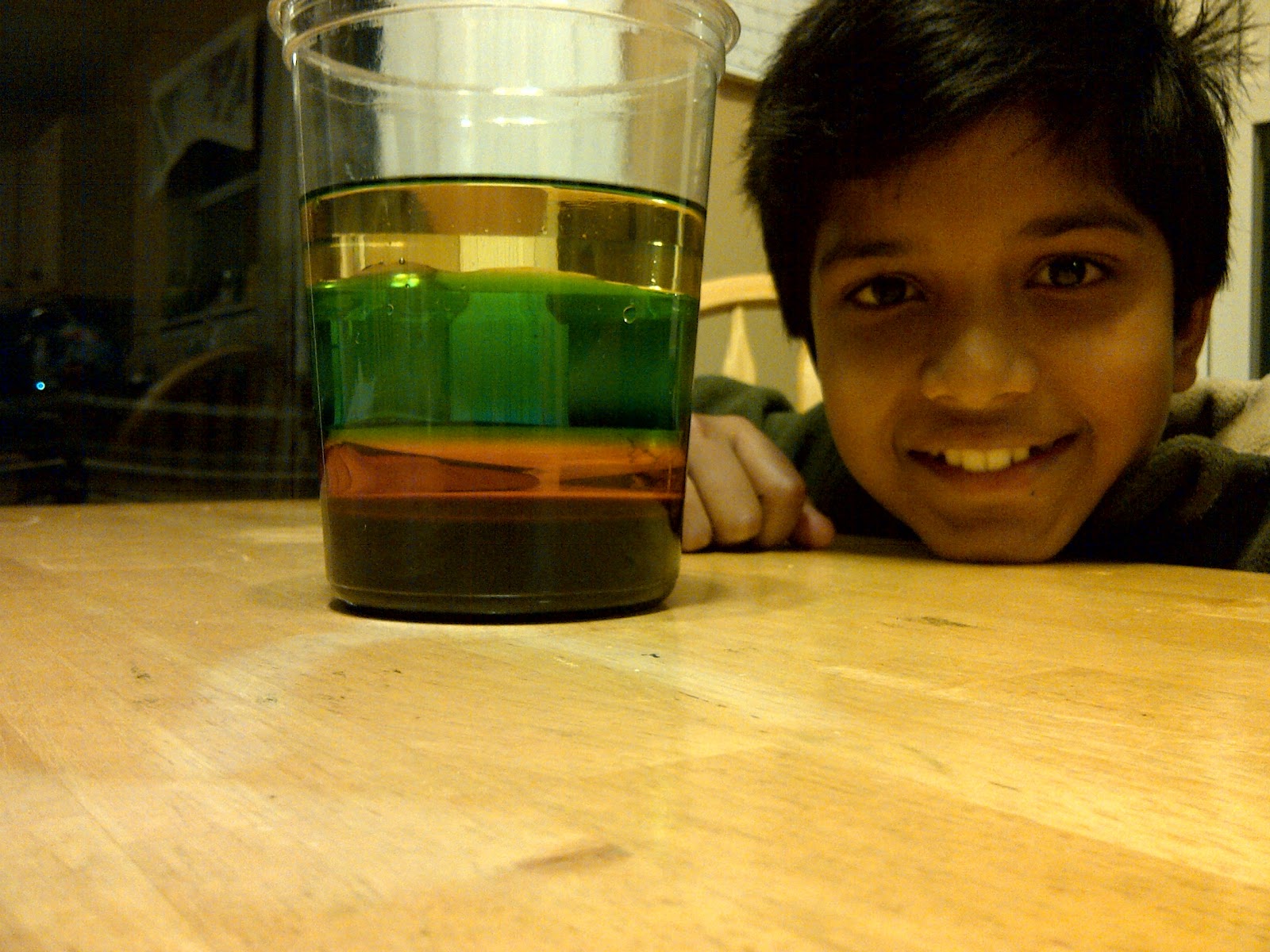
Density Columns

For extra credit students had the option to make a density column of different liquids. Here are some of the ones submitted.


Pringle Project

GOAL: The students were to design a container to send a pringle successfully through the mail in one piece with a density of less than 1 gram/cubic centimeter. For my challenge classes, the students were required to have a density of greater than 1 gram/cubic centimeter, which was much more difficult. Less than half were successful in keeping the density greater than 1.

Below are pictures of the containers and pringles once they arrived at Truman.

1st Hour


3rd Hour


4th Hour


6th Hour


7th Hour